
Tricuspid Valve Repair with TriClip™
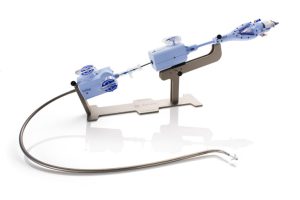 TriClip™ is a minimally-invasive treatment option for patients whose tricuspid valve is leaking. If this valve doesn’t close properly, blood flows backward into the right atrium, a condition called tricuspid regurgitation (TR). Doctors use the TriClip to clip together the three thin flaps of tissue, called “leaflets,” that comprise the tricuspid valve. This minimally invasive procedure tightens the tricuspid valve’s seal so blood flows in the right direction and the heart doesn’t have to work as hard, thus reducing patients’ symptoms.
How does it work?
During this minimally invasive procedure, an interventional cardiologist:
- Inserts the TriClip using a catheter.
- Guides the catheter with the TriClip attached through the femoral vein to the tricuspid valve.
- Puts the clip in place and removes the catheter.
- Leaves the clip in the heart to keep the valve closed tightly.
Am I a good candidate for treatment?
TriClip may be a good option if you:
- Have leaky tricuspid valve disease that is causing severe symptoms.
- Are at a high risk of problems with traditional open-heart surgery.
- Have been evaluated by a heart specialist who determined that you have a valve structure that would work well with the TriClip.
What can I expect after treatment?
You will stay in the hospital for a few days after the procedure and should be able to resume your normal routine in about two weeks. You will have several follow-up visits: at 30 days, six months, and one year after the procedure.
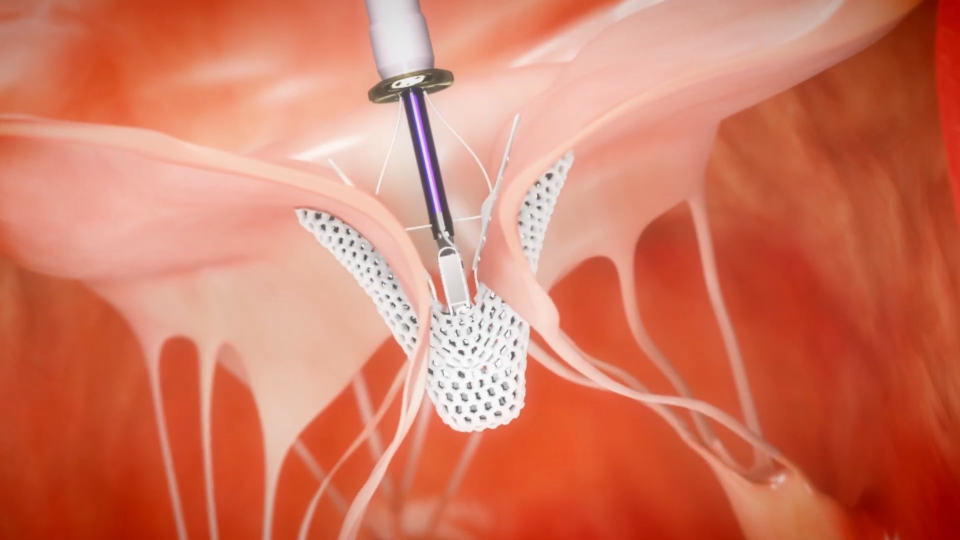
Triclip™ for Transcatheter Tricuspid Valve Repair
TriClip offers a remarkably safe, minimally invasive treatment option for patients in need of tricuspid valve repair who are unable to withstand surgery. See how it works in this animation.
Watch Video